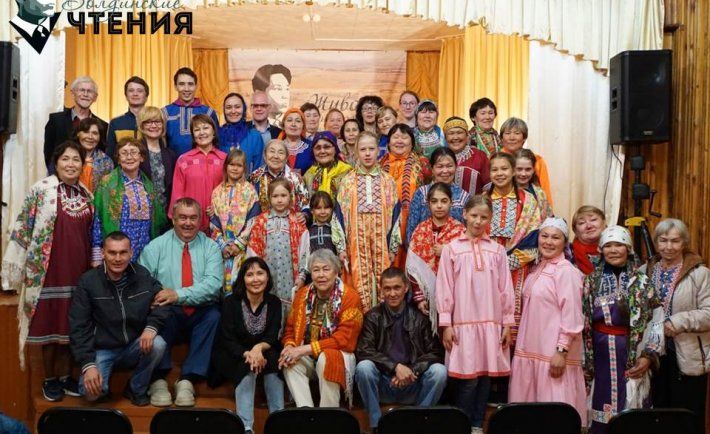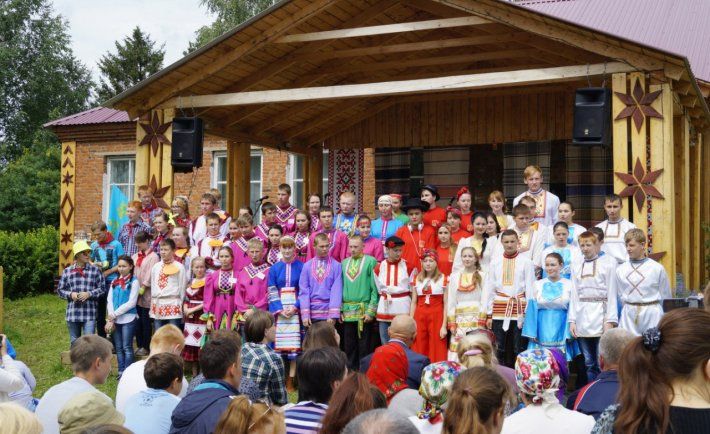





Analysis of major trends in the development of Finno-Ugric community shows that the main driving force of the updating process is Russia.
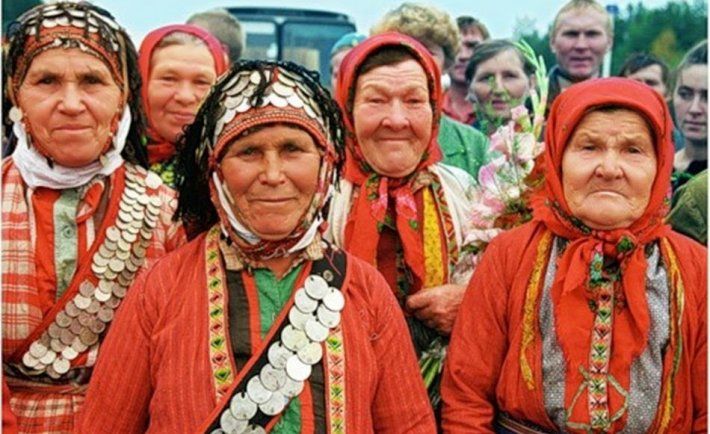
Finno-Ugric peoples are experiencing the same problems that are typical for many small ethnic groups. Peculiarity of modern Finno-Ugric peoples’ life is the acceleration of negative demographic processes (the ratio of births and deaths) and assimilation, thus giving rise to legitimate concern among representatives of the intellectual and political elite of the Uralic peoples.
On February, 28 the Russian Center of Science and Culture in Helsinki has hosted a celebration of the 175th anniversary of publication of Karelian-Finnish epos Kalevala. The celebration was held jointly with the Karelian Educational Society and the Karelian Language Society of Finland within the scope of the International Year for the Rapprochement of Cultures declared by UNESCO.
That day Kalevala and Karelian language became a subject of the discussion seminar.
The National Bureau of Investigation is examining an online hate site that calls for the murder of leading Finnish politicians as well as immigrants. The Finnish-language site is registered to a long-time American neo-Nazi.
The anonymous author behind the site's writing is suspected of illegal threats and the incitement of hatred against an ethnic group.
The site calls for the hanging or shooting of much of the Finnish political leadership, including President Tarja Halonen and Prime Minister Matti Vanhanen. The site also featured a hit list of 50 Finns, named for their role in promoting multiculturalism.
Through his paintings, Antipov shows his subtle understanding and feeling for nature as a living and continuously variable phenomenon.
Stanislav Antipov was born in Izhkar, Udmurtia in 1976. He graduated from the Udmurt National University art department in 1998 and completed a master's degree in art at Tallinn University in 2008. Since 1996 he has participated in more than 20 group or individual exhibitions in Udmurtia, Estonia and Finland.
A diplomatic spat is brewing between Russia and Estonia after each country dismissed a consul from the other. Russian MFA Spokesman Andrei Nesterenko Response to Media Query Regarding Estonian Consul General in St. Petersburg.
Question: How would you comment on media reports that the Russian Foreign Ministry has asked the Consul General of Estonia in St. Petersburg to leave the country?
Answer: Indeed, the Ambassador of the Republic of Estonia to the Russian Federation was summoned on March 1 to the MFA of Russia to be told that following the unfriendly action of the Estonian authorities who did not give consent to the appointment of a new Russian Consul General in Narva we are compelled to take retaliatory steps against Estonia’s Consul General in St. Petersburg. The bewilderment of official Tallinn over this retaliatory action causes surprise. We had earlier suggested that the Estonian authorities reconsider their decision on the Russian candidate without leading matters to the origination of a conflict situation. We regret that the authorities of Estonia have again chosen an unconstructive line, whipping up tension in our bilateral relations. It is clear that the responsibility for what happened lies on the Estonian side.
The biometric passport control system has been tested at the Vaalimaa border crossing point between Finland and Russia for the last three months, reports Helsingin Sanomat. So far, only Finns and EU citizens holding biometric passports can use the self-service. Biometric passport control has also been tested at Helsinki-Vantaa airport since 2008, as described in the Barents Review 2010, a publication written by the staff of the Norwegian Barents Secretariat.
Finland is the third happiest nation in Europe, according to a new study published by the Social Insurance Institute of Finland (Kela). When it comes to feelings of joy and contentment, Finland beat out its Nordic neighbours Sweden and Norway.
Women tend to be happier than men, according to the study led by Olli Kangas, who heads the research department at Kela. Over 31 percent of Finnish men said they are extremely happy. For Finnish women, the number was 45 percent. A total of 1.4 percent of men and women said they are extremely unhappy.
Ways of expansion of cooperation became the staple subjects of the conversation between representatives of youth Finno-Ugric public organizations and the Minister of the RK on National Politics.
On the eve of the International Day of Native Language the Minister on National Politics and Relations with Religious Associations Andrey Manin has held a meeting with heads of some youth public associations of the Baltic and Finnish peoples. Chairman of Nuori Karjala (Young Karelia) youth public organization Natalia Antonova, Director of Trias youth public organization Sergey Kasyanov and Chairman of Youth association of Finno-Ugric peoples Alexey Tsykarev have taken part in the meeting.
President Dmitry Medvedev has named Dmitry Kobylkin as governor of the gas-rich Yamal-Nenets autonomous district, the Kremlin said Monday.
Kobylkin, head of Yamal-Nenets' Purovsky district, was one of the three candidates nominated by United Russia earlier in February.
The list also included Deputy Governor Viktor Kazarin and Igor Fyodorov, head of a Gazprom affiliate who studied law with Medvedev at the same university in Leningrad.
Members of the Komi Republic State Council ambiguously assessed the outcome of the Year of Komi Language at the February meeting of the committee on regional parliament national policy. We remind, in February 2008 participants of the IX Komi People Congress accepted the recommendation of the Republic Government for holding the Year of the Komi Language. Subsequently, 2009 was declared as the Year of Komi Language by Komi Republic government.
As the head of the department of the Komi National Policy Ministry Svetlana Kozulina said, sequestration of the republic budget has not prevented the agency to implement all measures planned for the Year Komi Language. Besides, cities and regions, among which she highlighted Syktyvkar, Ukhta, Usinsk, Inta , Sysola, Ust-Vym, Ust-Kulom and Izhemskij areas, joined the general campaign. "Russian-speaking cities pleased, - stressed S. Kozulina. – Vorkuta participated for the first time in the contest “Etnoinitiative” - they with children were looking to the traditions of the indigenous people."
On February 18, 2010 the first this year session of the Council of representatives of Karelians, Veppsians and Finns of the Republic of Karelia under the Head of the Republic of Karelia was held in Petrozavodsk.
Members of the Council, representatives of national public associations of Karelians, Veppsians and Finns, establishments of education, science, culture, Legislative Assembly, bodies of the government, representatives of administration of Pryazha and Kalevala national regions and Prionezhsky region, Veppsian rural settlement of Shoksha, mass media have taken part in the session.
Yoshkar-Ola, Republic of Mari El, Russian Federation, July 5-25, 2010.
Mari State University is happy to announce the annual Summer School of Mari Language and Culture organized by the Institute of Finno-Ugric Studies and the International Office of Mari State University.
You are welcome to apply and learn more about Mari language, a kin language to many other Finno-Ugric / Uralic languages: Finnish, Estonian, Hungarian, Komi, Udmurt, Erzya and Moksha Mordovian. Come to study a unique Mari culture, which has its roots in the pre-Christian pagan beliefs. You will be taught to speak, write and understand Mari, learn the traditional life of Mari people, see the Volga river and feel the spirit of this Finno-Ugric minority in the middle of the Russian mainland.
The world’s smallest language, Ter Sami, is only spoken by two persons. Also, Ume Sami and Pite Sami will not last long.
According to Pravda, there are only two people left speaking Ter Sami, a Sami dialect spoken in villages in the eastern part of the Kola Peninsula. In the end of the 19th ventury, there were six Ter Sami villages, with a several hundred inhabitants. Now, there are some 100 ethnic Ter Sami in the area, of whom only two elderly persons speak the original languages. The rest have shifted to Russian.
The State Committee of the Republic of Karelia on Youth and Regional Center of Economic Development, Transport and Environment of North Savo have signed the agreement on cooperation.
The plan of joint actions on implementation of the Agreement specifies the following priority directions of cooperation: researches in the field of youth policy and methods of work with youth, activity of youth workshops, preparation and training of youth councils. Among priority actions special attention was focused on the second innovative international youth forum of designing of the future Hyperborea 2010 to be held in Karelia in the end of July.
A severe lack of teachers could threaten the future of the languages of the indigenous Sami people in Finland.
The critical nature of the shortage of teachers came to light in a study carried out for the Giellagas Institute at the University of Oulu which surveyed the educational needs in Finland related to Sami language and culture.
The Sami are an indigenous people that live traditionally in Finnish Lapland, the Kola peninsula and central and northern parts of Sweden and Norway. About 6,400 Sami live in Finland.
On February 19, at 4:30 p.m. the Center of National Cultures and Crafts will welcome the inter-regional exhibition of Finno-Ugric newspaper and amateur photographers We Are and Will Be.
The exhibition includes 30 works of newspaper photographers and amateur photographers from Karelia, Komi, Komi-Permyak district of the Perm Region, Mari-El, Mordovia, Udmurtiya, Khanty-Mansi and Yamal-Nenets Autonomous Districts, Murmansk area and St.-Petersburg.
The photographs mostly represent portraits of ethnoses - their singularity, difference and originality of the Finno-Ugric peoples of Russia. Portraits of representatives of smaller Finno-Ugric peoples such as the Votes, Izhors, Ingermalandian Finns and Setos are also presented here.
Barents Euro-Arctic Region as the international regional organization uniting administrative regions of Norway, Sweden, Finland and Russia located around the polar circle was founded in January, 1993. Now at the regional level it includes 13 subjects. Russia is presented there by republics of Karelia and Komi, Murmansk and Arkhangelsk areas and Nenets district.
Within the agreement on cooperation in the Barents Euro-Arctic Region, known as Kirkenes Declaration, issues on its coordination are annually discussed by Ministers for Foreign Affairs of its constitutor countries at the created with this purpose Council of the Barents Euro-Arctic Region (Barents Council). Special paragraph of the Declaration devoted to indigenous people confirms adherence of the countries to support the rights of indigenous people, supports offers of representatives of indigenous people participating in discussion of the program of Barents cooperation, preparation of the program on restoration and protection of cultural heritage of indigenous people, creation of ethnocultural centers, special medical fund.
With only 3.000 speakers in Northwest Siberia the Ob-Ugrian language Mansi is on the verge of extinction. Predictions say it will be extinct in ten to twenty years at the latest. The same holds true for Khanti, a member of the same language family. It is for this reason that extensive documentation is so important.
Johanna Laakso, professor for Finno-Ugrian Studies at the University of Vienna concerns herself with the documentation of this and other minority languages in the framework of an FWF project and the EU project ELDIA.
The man most responsible for introducing American fiction into Estonia at a time when it was largely isolated from Western culture died Thursday morning at the age of 72.
Enn Soosaar, was born Feb. 13, 1937 in Tallinn, the son of the curate in the Estonian Evangelical Lutheran Church. Tragedy struck when a motorcycle accident in the 1950s left him in a wheelchair the rest of his life. Undeterred by this setback, he studied to be an English philologist at the University of Tartu and graduated in 1964. At home he was surrounded by many books, which played huge role in turning him into one of the most important intellectuals in the smallest Baltic state.
Finnish consortium Sofi will create the Center for Polar Tourism in the town Salekhard. The agreement with the administration of Yamal was signed by the director general of the consortium Erkki Lepp?nen. By the information of the deputy governor of Yamal-Nenets Autonomous Okrug Oleg Kontonistov, the consortium Sofi intends to build not only the hotel complex in the capital of the region but also accompanying infrastructure. As a result, Salekhard will be able to receive from 50 to 60 thousand tourists per year. Finnish consortium Sofi unites about 50 Finish companies with total yearly turnover more than 7 milliard euro. Now it takes part in building of sports and tourist objects in Moscow and Krasnodar Krai. Before the procedure of signing of the agreement the deputy governor, the chief of the department of international and interregional relations of Yamal Alexander Mazharov underlined that the project would give an impulse to development of new economic relations in the region. Such investment projects are welcomed in Yamal. They allow creation hundreds of additional working places for Yamal people and are directed to forming of new branches of economy in towns and districts of the region. “Vnesheconombank” (“Bank of development and external economic activity”) and the Federal agency on tourism are guarantors of Finnish-Yamal cooperation. By the words of Erkki Lepp?nen, Yamal-Nenets Autonomous Okrug received the opportunity to realize the innovative tourist project, which will be distinguished with its singularity. Traditions of ethnic minorities and nature unique for the world are kept in the region. Tourists does not come just to stay in a new place, they arrive to feel new sensations between themselves and nature. And for Finnish companies it is the big honor to take part in this project, because the consortium is orientated exactly to such projects.
Finland on Friday gave the go-ahead for a gas pipeline from Russia to Germany when the Regional State Administrative Agency for Southern Finland issued a permit to Nord Stream AG for construction in Finland's Baltic sea economic zone.
The project will comprise two pipelines crossing 375 kilometres of Finland’s Exclusive Economic Zone. The pipeline will be used to transport 55 billion m3 of natural gas annually to Germany and from there to several other European countries.
The European Commission will carry out a detailed analysis of the Slovak Language Law to assess its application, Commissioner for Multilingualism Leonard Orban told the European Parliament during a debate on the usage of the languages of ethnic minorities across the European Union. Initiated by Slovak MEP Edit Bauer and her Hungarian counterpart Kinga Gal, the debate commenced shortly before Tuesday midnight and turned into a verbal shootout between Slovak, Hungarian and Romanian members of the European Parliament with the Hungarian MEPs uniformly criticising the status of minorities.
“I am speaking on behalf of 500,000 people of minority and about the language law violating their rights. How can one be punished for using their mother tongue? Such a law cannot be applied,” said Bauer, pointing to the large fines of up to €5,000 euro laid down by the law. Furthermore, she said Slovakia is failing to fulfil all its duties stemming from the Charter of Fundamental Rights. Hungarian MEP Zoltan Balczo said that Slovakia preaches specific values but does not observe them. Slovak MEP Jaroslav Paska countered by saying that “our Hungarian friends have been teaching us of late about the use of minority languages, but somehow they forgot to look at themselves and how minorities in Hungary are being restricted in the use of their native tongue,” he said. “In Hungary, Slovak children can only dream about Slovak schools, as the Hungarian Government is not making it possible for them unlike other governments in the European Union,” said Paska.
Four regional leaders were replaced by President Medvedev on Monday.
President Dmitry Medvedevt nominated new governors to Krasnoyarsk region, Khanty-Mansiisk, Dagestan and the Jewish Autonomous Region as part of his course of refreshing the governors' corps.
State Duma member Natalia Komarova, 55, will head Khanty-Mansiisk Autonomous Region in Siberia to become the second female governor in Russia after the head of St Petersburg Valentina Matvienko. Kommersant daily said Komarova's gender was an argument for Medvedev in making his choice. Medvedev has said on several occasions that there should be more women at high official and corporate posts.
Reindeers belonging to Norwegian herders are inflicting damage to the Russian national park Pasvik, a TV channel in Murmansk reports.
Reindeers belonging to Saami reindeer herders in Norway crossed the border to Russia in January and inflicted damage on the national park by eating and trampling down the unique vegetation in the park, Murmansk based TV channel TV21 reports.
Three-fourths of Estonians say they are generally satisfied with their life, according to a Eurobarometer poll made public by the European commission on Tuesday.
To the question "On the whole, are you satisfied with the life you lead?", 74% of Estonians said yes. The same was said by 63% of Lithuanians and 59% of Latvians. Average score for EU27 was 80% and while 98% of Danes were satisfied with their life, only 38% of Bulgarians agreed.
Denmark, Sweden and the Netherlands make up the top three of the general life situation ranking, with Bulgaria, Hungary and Greece languishing at the bottom of the table.
ETHNO ESTONIA 2010 takes place on July 16-25 in Kõpu village not far from Viljandi in South-Estonia and in Viljandi during the Viljandi Folk Music Festival.
ETHNO ESTONIA is a musical gathering and traditional music course for young musicians between 16 and 30, who love to play traditional music on any instruments and would like to learn/exchange tunes and make music with young musicians from Estonia and other foreign countries.
ETHNO ESTONIA takes place every summer one week before the Viljandi Folk Music Festival (http://www.folk.ee/festival). During the workshops, all music is taught by listening. There will totally be 70 participants, 10 mentors and a couple of guest musicians and teachers at ETHNO ESTONIA. The ethno week includes:
• Estonian traditional music workshops • Foreign participants’ workshops • Dance workshops • Singing workshops • Participants’ concerts both during the ethno week in Kõpu and at the Viljandi Folk Music Festival
Kõpu is a village with ca 800 inhabitants not far from Viljandi. Lodging and workshops all take place at Kõpu school, which is a recently reconstructed manor house in classicistic style from 1847 surrounded by a big park. Not far from the manor house, there is a river for refreshing baths.
Participant fee: 100 € The fee includes food, transport between Viljandi and Kõpu, ethno T-shirt, festival ticket and lodging both in Kõpu and in Viljandi during the festival. Food during the festival is not included.
On Saturday, Sámi people in the Nordic countries and Russia observe Sámi People's Day. Celebrations on this day commemorate the first joint Sámi congress held on February 6, 1917 in Trondheim, Norway. The conference launched cross-border Sámi cooperation that still continues today.
Sámi people have observed their national day since the 1990s, although it wasn’t written into Finnish calendars until 2004.
The Sámi are the only indigenous people of the European Union.
Many of Finland’s 9,000 Sámi have left their traditional homeland in the far north, which spans the municipalities of Enontekiö, Inari, Utsjoki and Sodankylä. Today, some 1,000 Sámi live in the Helsinki region.
Tundra areas of the north may seem like endless wilderness with a huge potential for industrial activity. However, the activities of the industrial companies pose a challenge to the indigenous peoples' traditional use of the pasture lands and the reindeers migrating routes.
In the Norwegian Barents Secretariat’s new report, Barents Review 2010, secretariat adviser Christina Henriksen writes about the complex challenges connected with co-existence of industry and indigenous peoples living in the Barents Region.
The Republic of Karelia is an active participant of international cooperation in the Barents Euro-Arctic Region (BEAR), where special attention is paid to cooperation between indigenous peoples of the region.
Among the indigenous peoples of the Barents region there are Laplanders living in Norway, Sweden, Finland and Murmansk region of the Russian Federation, Nenets people of of Nenets Autonomous District and Veppsians of the Republic of Karelia which have their representatives in the working group concerning indigenous peoples.
Under the initiative of the superior governing bodies of the Barents Euro-Arctic Region - Barents Region Council and Regional Council - for the first time the First Congress of Indigenous Peoples of the Barents Region and Coexistence in the Arctic conference where the main attention will be paid to life activity of indigenous peoples in the century of extractive industry development will be held in Kirkenes (Norway) on February 4-5, 2010.
The authorities of Komi Republic report on the plans for activation aquaculture projects.
According to the information of the Ministry of agriculture and food of Komi Republic the yearly consumption of fish products in the Republic is 18 000 tons while own fish production is only 260 tons.
In the year 2009 the fish production in Komi increased by 42%, says Minister of agriculture Mr. Sergey Chechetkin, according to Fishnews.ru
The realization of fish products grew up by 27%. The Minister reported that during the next four years the local authorities plan to increase the fish production up to 1,5 thousand tons due to active development of fish farming.
Нужное для постройки коттеджа. Любые бетонные заводы помогут вам.. Туры в Турцию, из Екатеринбурга. Описания минивэнов Mercedes-Benz: ремонт мерседес - официальный дилер "Мерседес-Бенц".
Recent comments